Microwave Digestion Preprocess Platform: Automated Reconstruction for Elemental Sample Analysis
Before a sample even reaches the formal analysis stage in the laboratory, it undergoes more than a dozen manual operations. Inconsistencies in data quality often arise from these steps, which are easily overlooked.
These procedures seem disconnected, with separate interfaces. While the error from a single step might appear minor, errors build up as samples are passed along. Crucially, this initial segment is the closest to the sample in the entire data process, involving the most human interaction and the least robust process documentation. At this stage, maintaining sample identity, accurate reagent addition, precise volume control, proper transfer routes, and consistent reaction status are all susceptible to variation.
The Ou Shisheng microwave digestion platform seamlessly integrates sealing integrity checks, overpressure/overtemperature interlocks, acid fume extraction, leakage and waste liquid management, and corrosion-resistant material selection. It streamlines over a dozen separate operations into a continuous, automated workflow. Within a single digestion cycle, dual robotic arms concurrently handle preprocess, postprocess, cleaning, and reinspection. Weighing, acid dispensing, volume adjustment, and serial dilution are all managed through programmed parameters. For complete end-to-end traceability, sample identity is securely linked to all process data.

01 From Sample to Sample Loading: Many Manual Interfaces in the Workflow
Converting a powder sample into an loadable test solution involves a full operational chain: weighing, acid addition, predigestion/soaking, vessel loading and sealing, digestion, cooling, vessel opening and degassing, volume make-up, coding and transfer, and finally instrument sample loading. This is followed by digestion tube cleaning and re-inspection.
In the traditional manual workflow, each step in this chain presents an opportunity for error. Weighing accuracy depends on the operator's technique, and acid dosage relies on consistent volumetric measurements. Transfers can lead to sample loss and cross contamination. Volume make-up is often based on visual judgment, and dilution factors are recorded manually. While the error at each individual step might seem minor, these errors accumulate progressively, ultimately resulting in batch-to-batch variation in test results.
02 Three Parameterized Mechanisms for Automated Microwave Digestion Preprocess
Mechanism 1: Consolidating Errors
Automation first ensures stable weighing and transfer of milligram-scale materials:
Integrated weighing and dispensing: Weighing and feeding occur at a single station. Samples are aspirated under negative pressure, preventing sample loss and cross contamination from multiple transfers.
Programmable liquid handling: Liquid handlers feature liquid level detection and drip monitoring. Acid dispensing, volume make-up, and dilution are all precisely controlled volumetrically by programs, removing the need for manual visual readings.
High-precision automated transfer: Six-axis robotic arms achieve submillimeter positioning and automatically switch between various gripper types, ensuring accurate placement during transfers throughout all processes.
Mechanism 2: Aligning Preprocess Steps with Digestion Cycles
Once single-point precision is achieved, software-coordinated workflow scheduling eliminates throughput bottlenecks. A microwave digestion program, once initiated, has a fixed duration that cannot be shortened; this 2-hour period defines the rigid cycle of the workflow. Only operations outside this time frame can be rearranged and optimized.
The Ou Shisheng microwave digestion preprocesst platform uses this digestion time as the basis for its timing design. While digestion is underway, dual robotic arms concurrently perform post-treatment and cleaning for the previous batch, as well as preprocess for the next batch. The combined time for these three auxiliary operations is managed within 115 minutes, ensuring a smooth handover between batches.
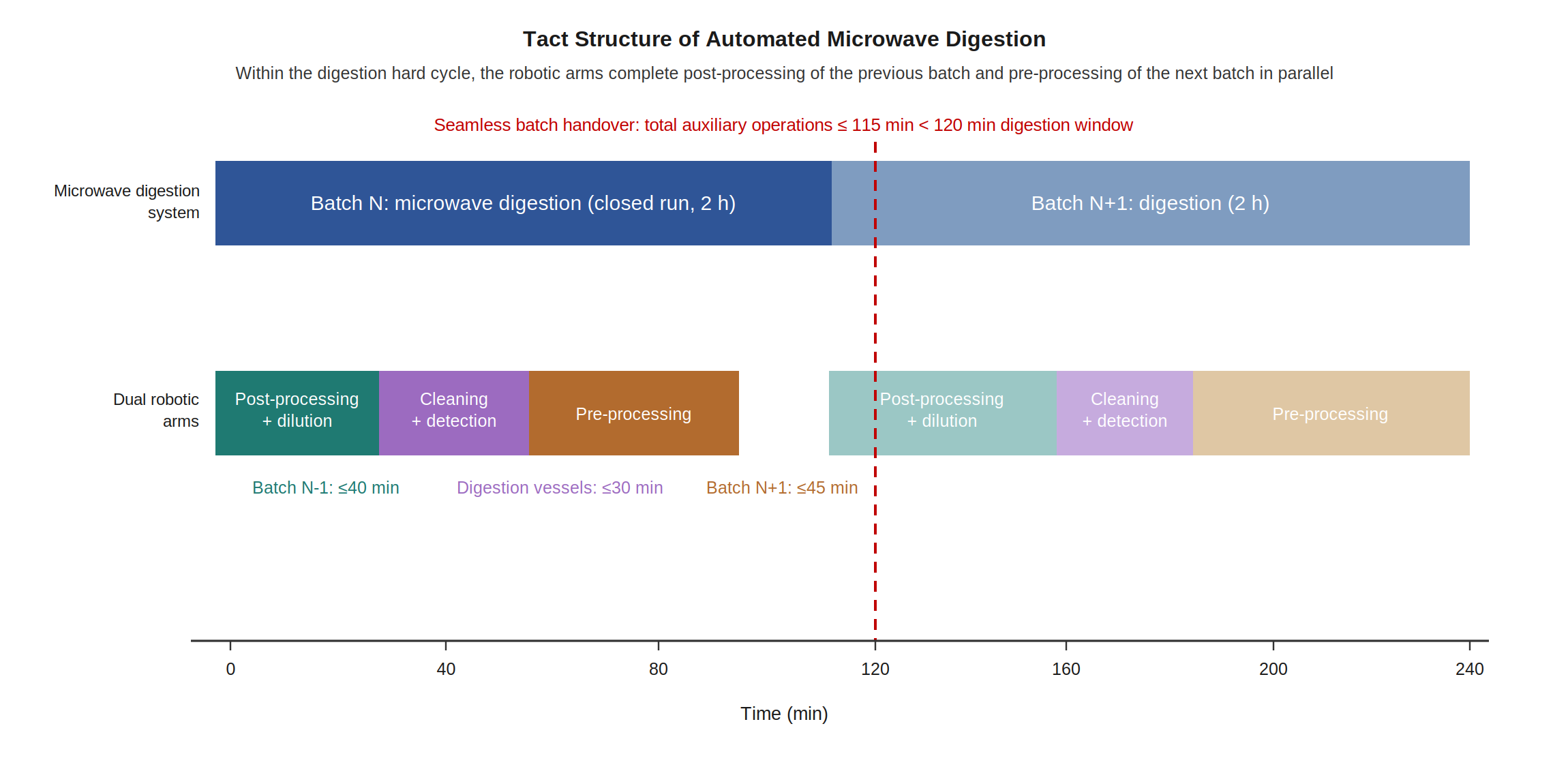
Figure 1|Parallel Timing Architecture of Oushisheng Microwave Digestion Pretreatment Platform
Throughput is no longer limited by the operator's speed, but by the instrument's programmed timing sequence. This represents the fundamental difference in production capacity between an automated workflow and manual operation.
Mechanism 3: Automatic Interception of Abnormal Samples
High-throughput operation carries an inherent risk: abnormal samples can quickly generate batches of invalid test results. The platform includes an automatic quality check after digestion. A robotic arm uses a vision probe to inspect for solid residues at the bottom of digestion vessels. If caking is detected, the sample is automatically flagged, acid is added, and a secondary digestion is performed. If the sample still fails re-inspection after the second run, the system triggers an alarm and routes the sample for manual handling.
Combined with laser marking on digestion tubes, each sample's identity is linked from the beginning of the process. Weighing data, acid dispensing volume, digestion program, final volume, and dilution factor are archived simultaneously. Digestion quality transitions from "post-hoc empirical judgment" to "in-line automatic evaluation," preventing non-conforming samples from silently entering the detection stage.
03 From Automated Workflow to Data Generation Pipeline
At this stage, the workflow delivers more than just test solutions. The Ou Shisheng software system offers standardized API interfaces, supports TCP/IP and Modbus communication protocols, and allows for seamless integration with AI optimization platforms. This enables automatic distribution of experimental tasks, autonomous workflow execution, automatic data acquisition and storage, as well as the querying and export of experimental parameters, test data, and equipment operating status.
For AI4S, a fundamental requirement for algorithms to perform method optimization or anomaly root-cause analysis in elemental analysis is the availability and traceability of process data. When every sample enters the database with complete process records, each value from the detector can be traced back to the corresponding sample, parameter set, and operating conditions. The automation of pretreatment effectively opens the black box between the sample and the data, transforming it into a computable and auditable data stream.
Preprocess has long been considered merely preparatory work for testing. However, in the data-driven R&D paradigm, it acts as the primary determinant of elemental data quality. Once the conversion process from sample to data is structurally recorded, analytical laboratories produce not only test results but also data assets that can be used for algorithmic utilization and retrospective verification.