Ou Shisheng Debut at CIIF 2026: Innovations Capture Attention from Authoritative Media


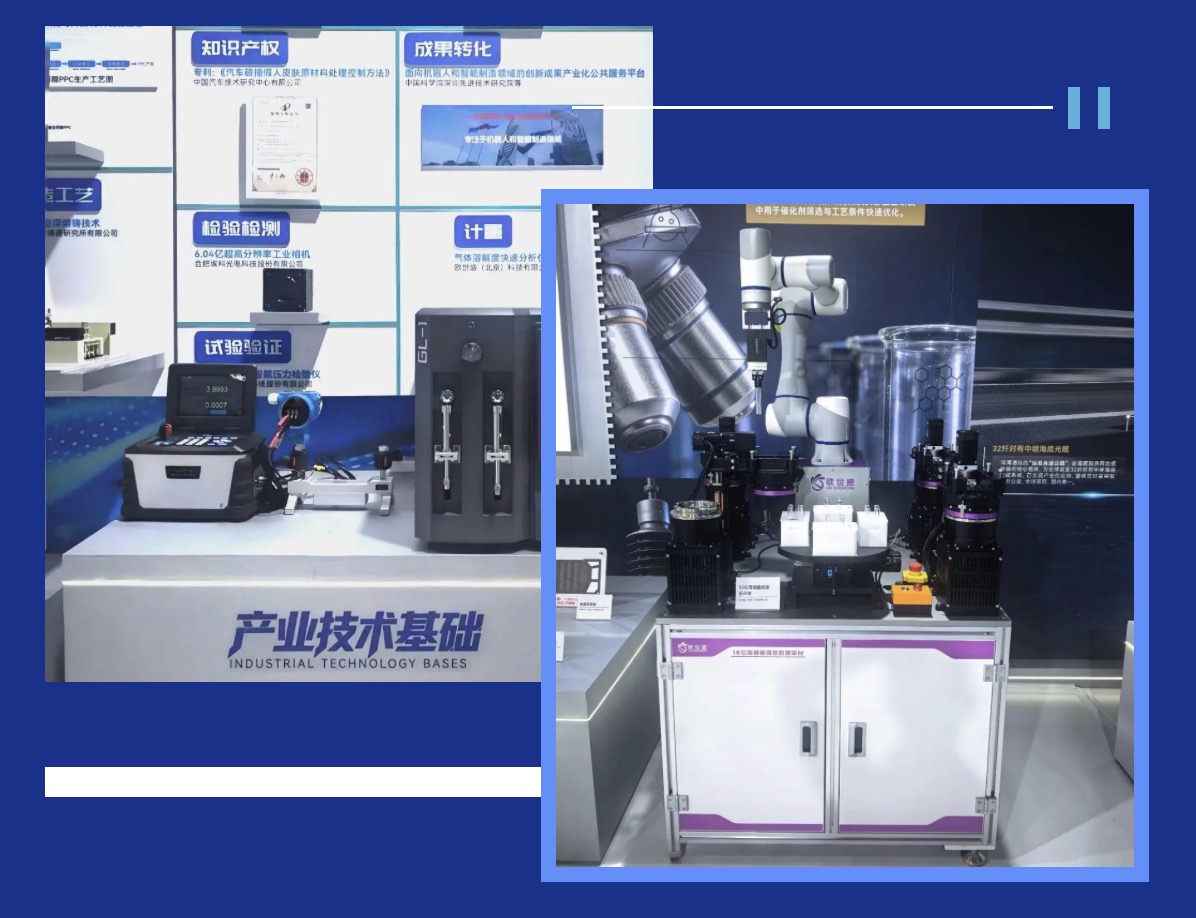
The China International Industry Fair (CIIF) opened in Shanghai on October 12, 2026. At the "Industrial Foundation Reconstruction Innovation Achievement Exhibition," located within the MIIT exhibition area, Ou Shisheng presented two of their independently self-developed intelligent experimental instruments: the 32-slot high-throughput microreactor system and the rapid gas solubility analyzer. This exhibition highlighted the company's comprehensive capabilities, from the independent research and development of core technologies to their implementation on-site.
Media Coverage
During the exhibition, journalists from Xinhua News Agency and the Innovation China program on China Media Group's Science and Education Channel visited the Ou Shisheng booth. They conducted on-site interviews, focusing on the innovative features of the equipment and how it is advancing scientific research methods. The equipment, with its strengths in automation, intelligence, and high throughput, stood out as a major attraction, drawing significant attention in the exhibition area.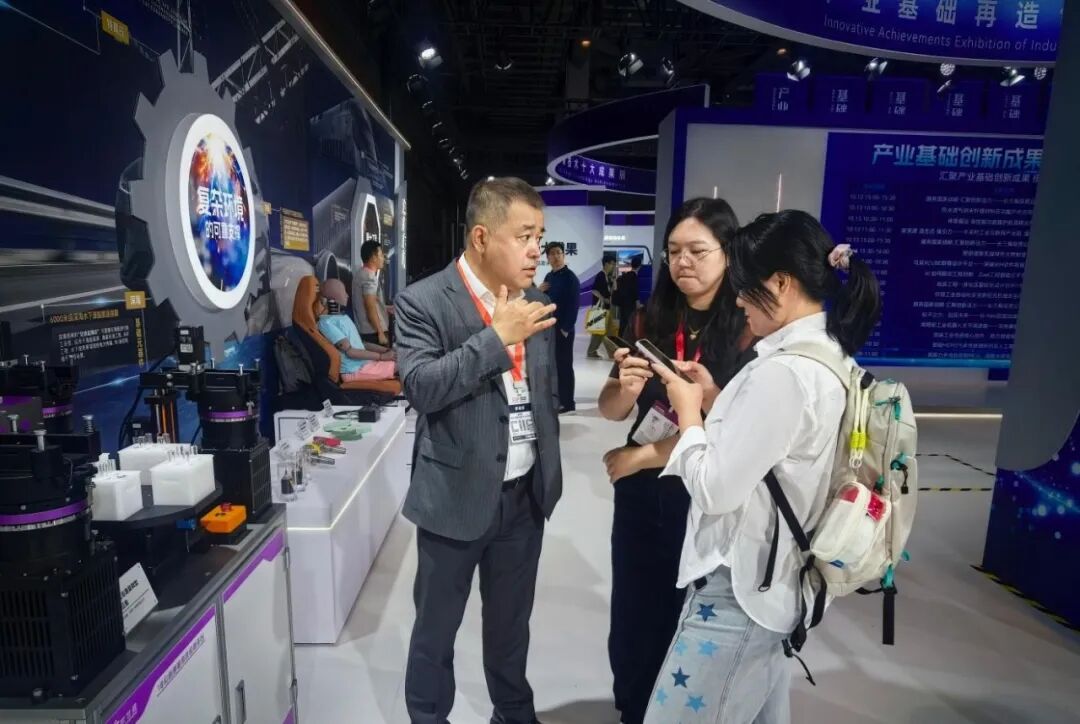
 Leadership Visit and Guidance
Leaders from the Ministry of Industry and Information Technology (MIIT), the Chinese Academy of Sciences, and the Shanghai Municipal Government visited the Ou Shisheng booth. They received on-site briefings on the technical features and research application scenarios of the two instruments. Our development strategy, which focuses on intelligent laboratory equipment to drive scientific and technological innovation, was acknowledged and praised.
Ou Shisheng: Empowering AI for Science (AI4S) from Prediction to Closed-Loop Operation
As large foundation models and AI Agent capabilities advance rapidly, the need for high-quality scientific research data has become a significant industry challenge. These models require massive amounts of authentic, pure, and traceable experimental data. However, data obtained from published literature and historical lab records often lacks negative data, suffers from poor experimental reproducibility, and exhibits inconsistent standards. Consequently, only intelligent reaction equipment capable of unattended, fully standardized automatic operation can generate the high-quality datasets essential for AI.
Ou Shisheng provides the foundational capabilities for generating this scientific research data. The company has developed a comprehensive "Chemical Building Blocks" system, offering standardized functional modules for precision dosing, temperature-controlled reactions, separation and purification, sample collection, and in-line analysis. This building block system currently includes nearly one hundred standardized modules, compatible with various energy fields such as high/low temperature, high pressure, strong corrosion, photochemistry, and electrochemistry. It covers over 90% of common chemical reaction types. All building blocks adhere to unified specifications for machinery, electrical systems, communication protocols, and data formats. These blocks can be flexibly reconfigured to rapidly construct autonomous laboratories tailored for diverse R&D scenarios.
On the software front, Ou Shisheng's proprietary software workstation serves as the central hub, connecting with AI systems. It automatically breaks down candidate schemes generated by AI models into executable parameter sequences and sends them to the hardware. Subsequently, it structures and archives full-process experimental data, which is then fed back to the models to support their training and optimization. This process closes the wet-dry loop, encompassing AI prediction — automated execution — data feedback — model iteration.
Ou Shisheng's intelligent equipment has been implemented across various advanced research fields.
· Small-molecule pharmaceuticals: High-throughput synthesis platforms, operating at milligram and gram scales for drug research and development, offer an automated workflow from microscale screening to linearly scaled sample preparation.
· Materials science: Platforms designed for photochemistry under inert atmospheres, electrochemistry, oligomer synthesis, and perovskite fabrication support the research and development of optoelectronic and polymer materials.
· Energy catalysis: Unmanned laboratories have been established that integrate catalyst preparation and evaluation. These are equipped with a groundbreaking, fully automatic catalyst evaluation instrument to accelerate catalyst development.
The company has cultivated long-term, stable partnerships with leading domestic and international clients, including WuXi AppTec, BASF, and BOE.
As AI for Science (AI4S) gains broader industrial adoption, Ou Shisheng integrates solutions into its intelligent instruments, advancing AI4S from simulation and prediction to real-world wet-lab validation. Moving forward, the company plans to deploy its dry-wet closed-loop capabilities to more universities, research institutes, and enterprise R&D sites, fostering a new paradigm for chemical research and development.
Functions & Features of the Two Exhibited Instruments
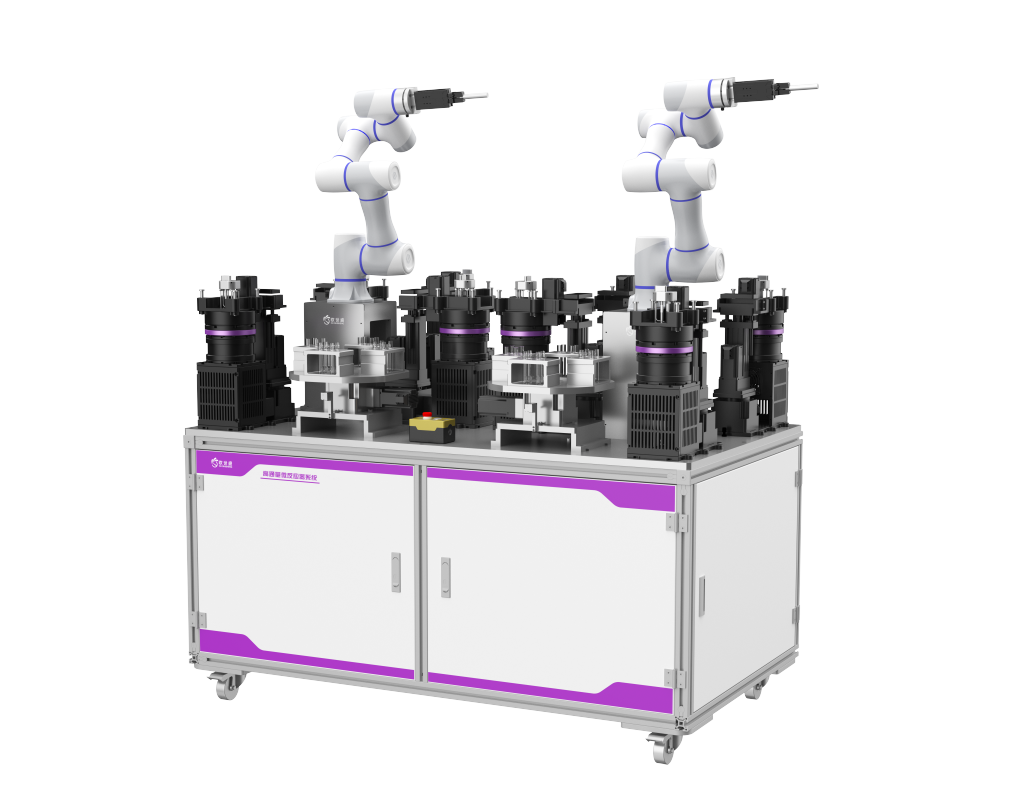
· High-throughput parallel operation: 32 independent microreactors run simultaneously. Multi-variable cross-screening of catalysts, solvents, ratios, temperature, pressure and other parameters can be accomplished in a single experiment. Screening work that takes weeks with traditional single reactors can be completed within one day.
· High-precision control: 8 independent temperature zones (room temperature - 500 °C, temperature control accuracy ±1 °C); closed-loop pressure control (maximum pressure rating 5 MPa, adjustment accuracy 0.1 MPa). The measured RSD of conversion and selectivity across all 32 channels is less than 2%, delivering excellent parallelism and reproducibility.
· Full-process automation: One-click batch execution via software. Automatic reactor cap opening/closing and reaction tube loading/unloading, automatic multi-gas purging and air tightness self-check. Full experimental data is automatically recorded and traceable.
· Hierarchical safety interlock: Pretest air tightness inspection; over-temperature and over-pressure alarms during operation; interlocked shutdown and pressure relief protection upon faults. Centralized tail gas treatment, complying with laboratory EHS regulations.
 · Rapid Equilibrium: As Beijing's pioneering equipment of its kind, it utilizes an original Tube-in-Tube microreactor. This technology achieves gas-liquid equilibrium in mere seconds, significantly reducing the measurement cycle.
· Dual Measurement Modes: The pseudo-steady-state mode is used to measure solubility, diffusion coefficients, and reaction kinetic parameters of conventional gases in liquids. The unsteady-state mode is employed for measuring diffusion coefficients, particularly effective for high-viscosity systems like ionic liquids.